Vibration Control & Engineering

Vibration Damping Devices

Reduce unwanted mechanical vibrations with engineered passive and active damping technologies. Explore Tuned Mass Dampers, Tuned Mass Absorbers and Active Damping Devices designed to address structural and machine vibration challenges.

Discuss Your Requirement →
Passive vibration damping device
Vibration Damping Technology
Vibration damping device application
Vibration Reduction Solutions

Engineered Solutions for Unwanted Vibrations

Mechanical vibrations can affect the performance, stability and acoustic behaviour of machines and structures. Damping devices provide a way to reduce unwanted vibration responses and address specific resonance or excitation conditions.

Flamboyant Solutions offers support for passive Tuned Mass Dampers (TMDs), Tuned Mass Absorbers (TMAs) and Active Damping Devices (ADDs), with attention to the characteristics and requirements of the target application.

✓ Passive vibration damping technologies
✓ Active damping using feedback control
✓ Application-specific device design
✓ Simulation, prototype testing and manufacturing
Our Technologies

Passive and Active Damping Devices

Damping technologies can be selected according to the vibration behaviour, frequency range and requirements of the target structure or machine.

01 / PASSIVE TECHNOLOGY

Passive Damping Devices

Passive devices use a resonant mechanical arrangement of spring and mass to reduce mechanical vibrations within a specified frequency band. This category includes Tuned Mass Dampers and Tuned Mass Absorbers.

Explore Passive Damping →
02 / ACTIVE TECHNOLOGY

Active Damping Devices

Active devices use sensors, a feedback controller and an electromagnetic actuator to generate a reaction force that reduces vibration in the supporting structure.

Explore Active Damping →
Passive Damping Devices

Tuned Mass Damper (TMD) & Tuned Mass Absorber (TMA)

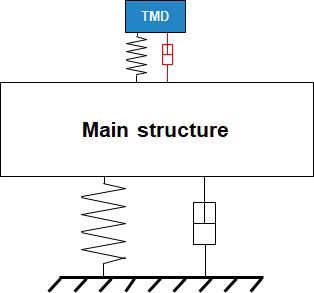
Both TMDs and TMAs are based on a resonant mechanical device consisting of a spring and mass, attached to a vibrating structure to reduce mechanical vibrations within a given frequency band.

Tuned Mass Damper illustration Tuned Mass Damper mechanical arrangement
Passive Device 01

Tuned Mass Damper (TMD)

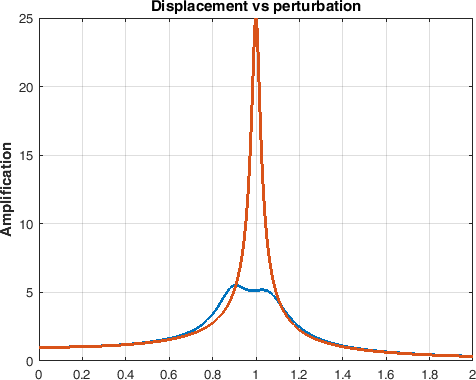
Tuned Mass Dampers include a damping element and act on structural resonances. When adequately tuned, they attenuate the high vibration peak at the structure's resonance frequency, thereby reducing dynamic amplification at that frequency.

With a TMD, vibration energy is dissipated through the damping element inside the device.

Device performance, including the damping of the main structure, is directly proportional to the mass ratio between the target structure and the TMD mass.

Typical recommended mass ratio: Approximately 5–10% of the target structure mass, as stated in the source material.
Passive Device 02

Tuned Mass Absorber (TMA)

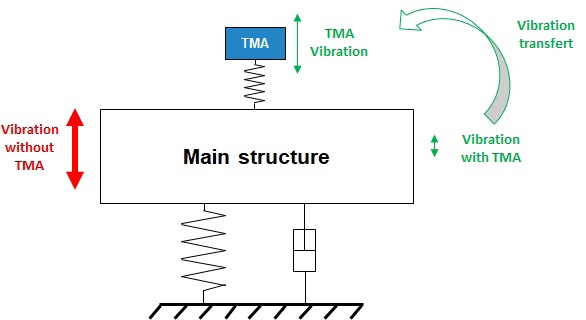
Tuned Mass Absorbers exhibit as little damping as possible and absorb harmonic vibrations at a given point.

When adequately tuned, a TMA absorbs vibration within a narrow frequency band at its location. The vibration energy is transferred to the TMA, where it is less or not detrimental to the target application.

The device performance, including its absorption bandwidth, is directly proportional to the mass ratio between the target structure and the TMA.

Typical recommended mass ratio: Approximately 5–10% of the target structure mass, as stated in the source material.
Tuned Mass Absorber illustration
Main Characteristics

Key Characteristics of Passive Damping

TMD and TMA technologies offer a passive approach to vibration reduction, with device design and tuning tailored to the structure and application.

⌖

Non-Intrusive

Vibration reduction using TMDs and TMAs is a non-intrusive process. No structural modification is needed. The device is fixed to the apparatus and reduces vibrations without degrading the static strength or stiffness of the target structure.

◉

Fully Passive

TMAs and TMDs are fully passive devices and do not require an external energy supply.

+

Additive Process

The source describes damping performance as an additive process: additional devices can be attached to the structure or machine to increase vibration reduction.

〰

Frequency Specific

TMDs and TMAs must be tuned to the respective target resonance or excitation frequency.

⚙

Custom Design

Every implementation requires attention to device weight, tuning frequency, available space, mechanical interfaces and manufacturing costs.

♨

Thermal Considerations

The thermal environment is also considered during application-specific device design and implementation.

Engineering Support

Custom Passive Damping Device Design

Although TMD and TMA technology is conceptually simple, each implementation requires specific engineering attention. The device must be designed around the target structure, its vibration characteristics and available installation space.

✓ Vibration diagnostics and requirement specifications
✓ Definition of spring, mass and damping components
✓ Mechanical interface and available-space considerations
✓ Dedicated TMD/TMA design
✓ Manufacturing and commissioning

Application-Specific Engineering

Device weight, tuning frequency, spring and damping characteristics, mechanical interfaces and thermal conditions are considered during the design process.

The objective is to develop a damping device suited to the vibration behaviour and practical installation requirements of the target machine or structure.

Implementation Roadmap

Passive Damping Implementation Process

The usual TMD/TMA implementation roadmap consists of three main stages.

01

Performance Simulation

Simulation of expected performance based on the results of a quick vibration response test (hammer test) and/or an existing FEM model of the structure.

02

Custom Design & Prototype Testing

Custom device design, prototype manufacturing and prototype testing to evaluate the proposed solution.

03

Serial Manufacturing

Serial manufacturing of the damping devices following the design and prototype development stages.

Practical Examples

Passive Damping Device Applications

Examples from the source material demonstrate how tuned devices can address vibration and noise transmission in different types of equipment.

Scroll Compressors

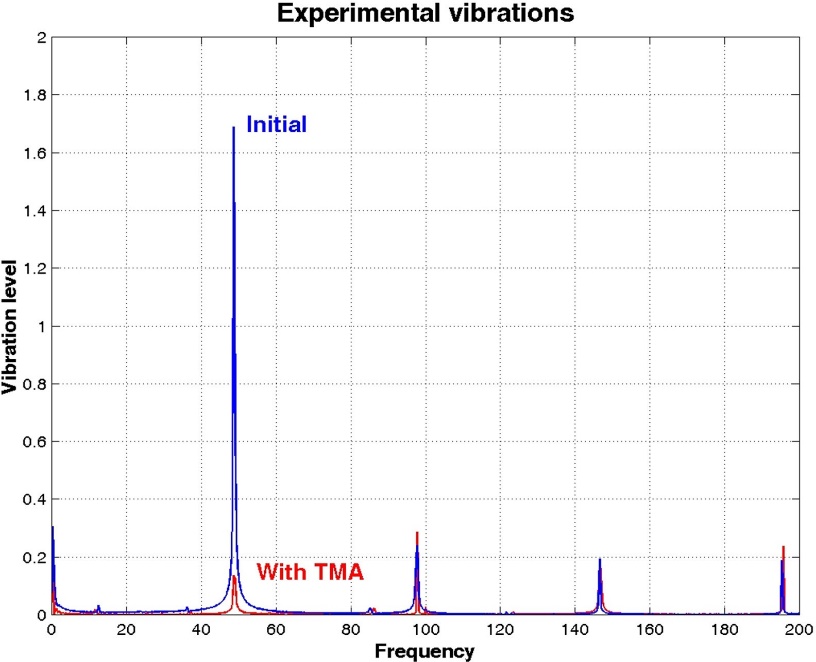
Scroll compressors used in heat pumps can transmit vibrations to building walls, generating acoustic noise. A Tuned Mass Absorber is mounted close to the pump outlet and tuned to the nominal operating speed of 48 Hz. At that frequency, vibration energy is transferred to the TMA rather than being transmitted to the building.

Wind Turbines

Wind turbines can experience tonalities at discrete frequencies, mainly originating from gearbox vibrations. These vibrations can be transmitted to sound-emitting areas such as the tower or blades. Tuned devices are mounted on gearbox torque arms to help prevent unwanted vibrations from reaching those areas.

Example of vibration damping device installation
Industry Applications

Existing Passive Damping Applications

Passive damping devices can be applied to a range of machines and structures where vibration control is required.

Wind Turbines

TMAs are located on gearbox torque arms to help avoid unwanted acoustic tonalities caused by gearbox harmonic vibrations.

Air Compressors

TMAs are located at resilient supports to reduce structure-borne acoustics or at compressor outputs to reduce vibration transmission to piping.

Piping Systems

TMDs are positioned at critical locations to help avoid leaks and limit fatigue caused by fluid pulsations.

Water Pumps

TMDs are mounted on pump motor supports to limit vibration amplification at critical pump velocities.

Semiconductor Applications

TMDs are used for reducing chatter during silicon wafer polishing.

Active Damping Devices

Active Vibration Damping Technology

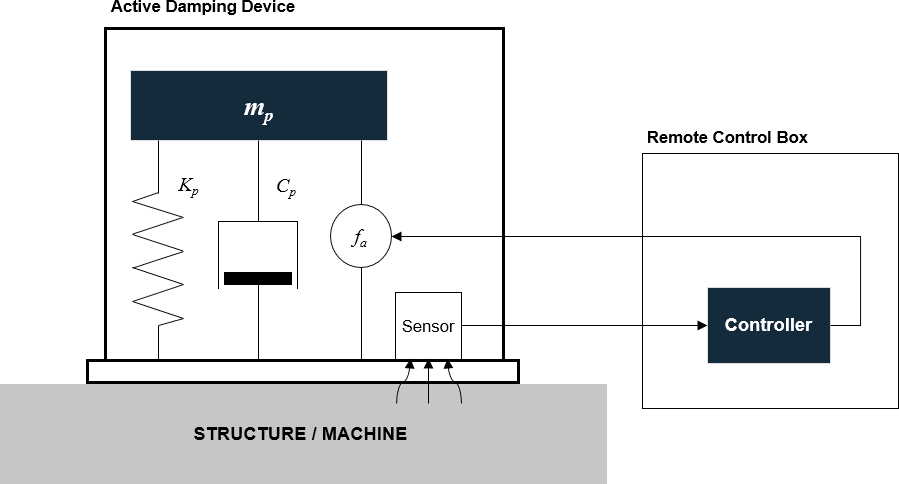
Active Damping Devices (ADDs) use an embedded sensor, an external feedback controller and an internal electromagnetic actuator to generate a reaction force that reduces vibration in the supporting structure.

Active damping device illustration Active damping machining process illustration

How Active Damping Works

Active damping is based on the principle that accelerating a suspended mass produces a reaction force on the supporting structure.

An embedded sensor monitors the vibration of the supporting structure. Its readings are sent to an external feedback controller, which drives the internal electromagnetic actuator of the damping device.

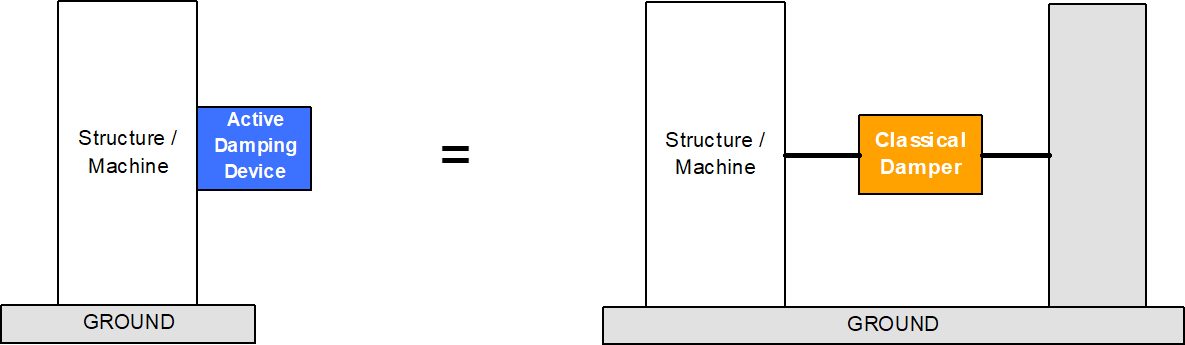
This controlled reaction force is used to generate additional damping in the structure or machine.

Active damping device example

Active Damping Device in Application

Active damping technology combines vibration sensing, feedback control and inertial actuation to apply controlled damping forces to the target structure.

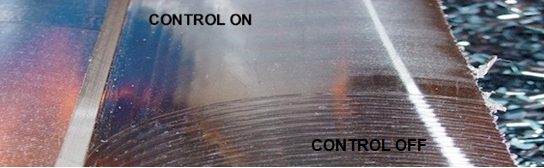
The source material describes applications in machining processes and other structures where unwanted vibration and resonance behaviour need to be controlled.

ADD Advantages

Key Advantages of Active Damping Devices

Active damping combines sensor feedback and inertial actuation to provide a flexible approach to vibration reduction across different operating conditions.

01. Non-Intrusive Operation

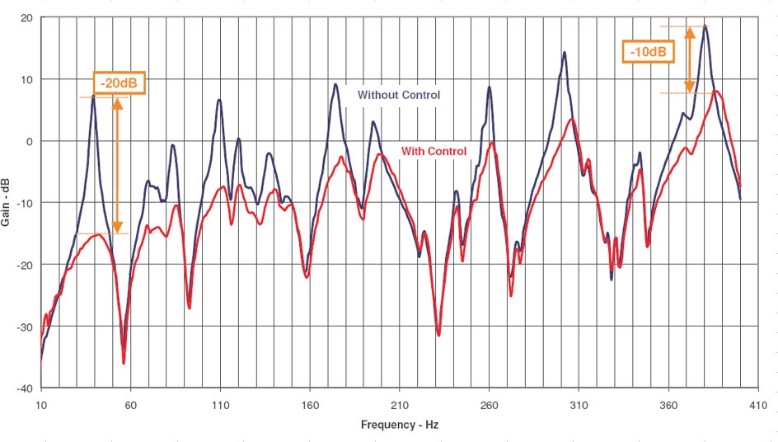
Active damping is a non-intrusive process. No structural modification is required. The ADD is fixed to the apparatus and generates damping. When control is turned off, the structure behaves as originally; when control is enabled, resonances are damped.

02. Control Robustness

The selected configuration of collocated sensor and actuator pairs can provide a more robust and stable control scheme, helping reduce stability concerns.

03. Additive Process

Damping with ADDs is an additive process. Additional devices attached to a structure or machine can provide additional damping.

04. Low Prior Structural Knowledge

The closed-loop damping strategy using DVF is described as relatively universal. Deep prior knowledge, in-depth modelling or structural analysis is not required before applying the damping device.

05. No External Mechanical Connections

Based on an inertial actuator, an ADD does not require an external mechanical link or physical reference anchor. It uses a virtual reference point, allowing installation where ground-connected structural parts are unavailable or impractical, including moving parts.

06. Wide Operating Bandwidth

ADDs can damp several modes within their operating bandwidth, unlike TMDs which address one mode. The typical bandwidth stated in the source is 25–2000 Hz.

07. Compactness

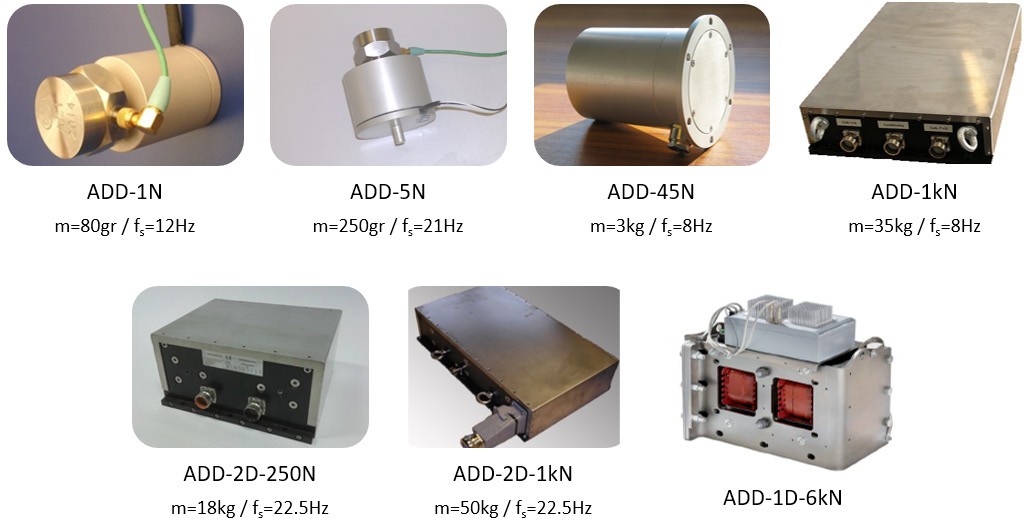
ADD performance is not driven by the mass ratio between the structure and actuator, as it is with a TMD. Actuator size depends on the required control force and the vibration energy to be extracted.

08. Application Flexibility

The active damping approach can be applied to structures experiencing changing vibration spectra and varying excitation conditions, within the operating bandwidth of the selected device.

Active damping with an inertial actuator

Active Damping with an Inertial Actuator

An inertial actuator creates a reaction force on the supporting structure. The sensor and feedback control arrangement helps the actuator generate the damping response required by the application.

Compact Actuator Design

The source material reports that an impressive damping ratio was achieved on a 400 kg structure with a 20ge actuator. The actuator size is determined by the required control force rather than by the structure-to- actuator mass ratio.

Compact active damping actuator
Active Device Development

Active Damping Implementation Process

Active damping implementation follows a structured process to evaluate required actuator force, verify performance and develop application-specific hardware.

01

Force Computation

Computation based on an existing FEM model of the structure and/or results from a quick vibration response test to evaluate the required actuator force.

02

Performance Testing

Testing with existing actuators generating the computed force to check performance improvements in the customer's machine or process.

03

Custom Development

Where required, custom actuators and/or controllers are designed to fit the customer's machine or process.

Active Damping Applications

Where Active Damping Devices Are Used

Active damping technology can support applications where structural vibration affects accuracy, stability, noise emission or machining performance.

Pointing Accuracy Improvement

Improving pointing accuracy in systems with a vibrating base.

Camera & Optics Stabilisation

Improving the stabilisation time of moving cameras and optical systems through structural damping.

Structural Noise Reduction

Reducing noise emissions associated with structure-borne vibrations.

Machine Tool Chatter Avoidance

Damping machine structures to help prevent unwanted chatter during machining operations.

Vibration Control Solutions

Need a Custom Vibration Damping Solution?

Discuss your machine or structural vibration challenges with Flamboyant Solutions. Our team can help explore suitable passive and active damping technologies, application-specific design and implementation.

Contact Our Team →